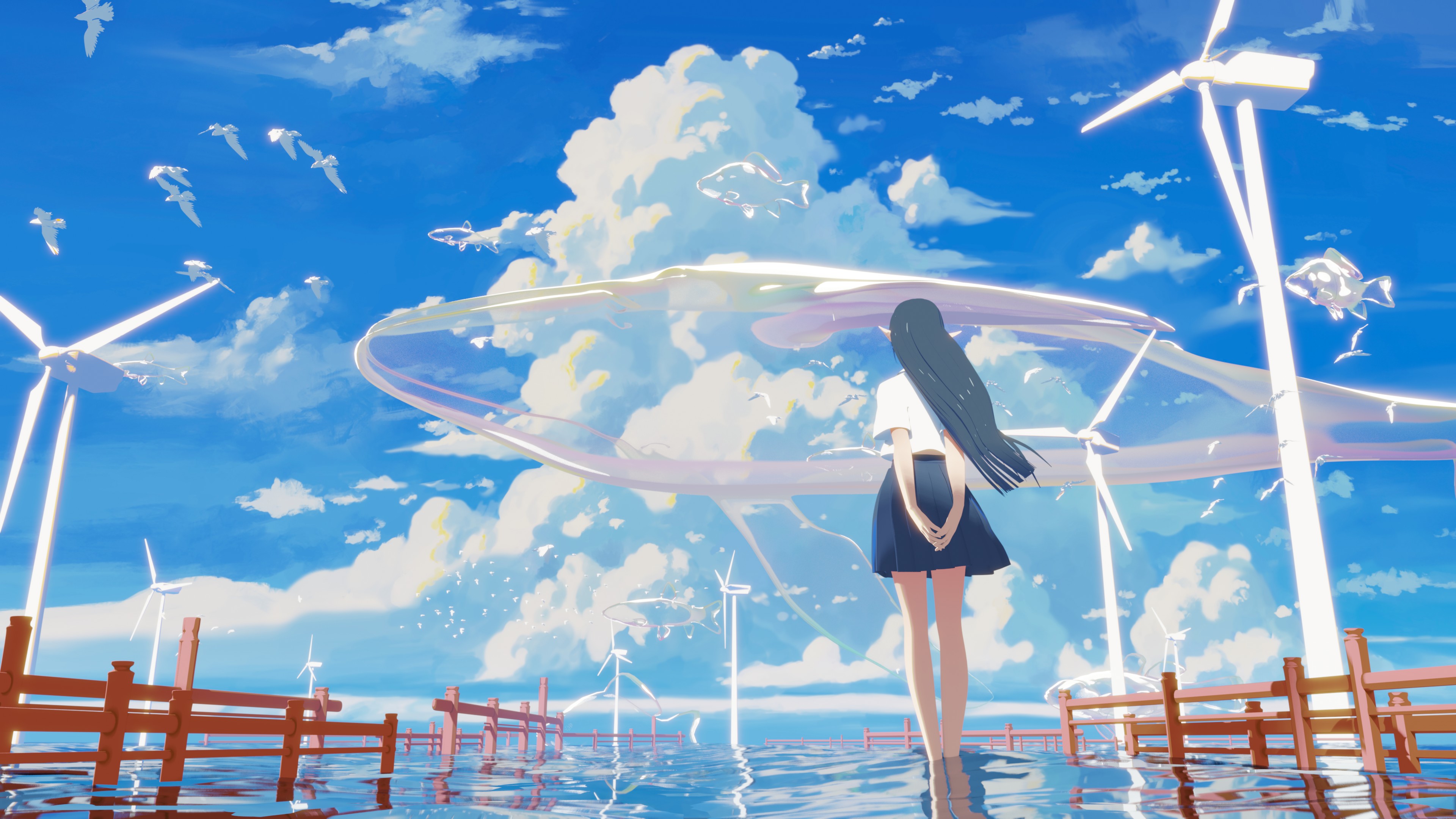


Being a literary youth is a disease
Being a literary youth is a disease that makes you awkward in a crowd—or an involuntary inability to fit in. It is not noble, of course. It may often make both you and the people around you uncomfortable.
It usually also requires at least one unrealistic fantasy. When that fantasy falls apart, the relationship may be hard to sustain too. In the middle of the film, when the male lead decides to find a proper job, the atmosphere begins to change. I stepped back from the film there as well.
Meeting someone similar is pleasant at first; living together is constrained; over the long term, it is unreasonable.
Because if someone nearly identical to us existed, people would be most afraid of looking into the mirror—or of seeing themselves, or their former selves. When I see characters in a work who resemble me, I usually feel two things at once: surprise and embarrassment. Living with a perfectly identical version of myself probably would not feel very good either.
But people who are entirely on the same wavelength do not actually exist. The female lead falls asleep watching gas tanks, and the male lead does not like mummies either—he is afraid the waiter will discover that he watches them. From the beginning, their supposed meeting of souls was only an assumption, like assuming they were listening to the same song. Like the metaphor they both say in unison five years later at the beginning:
One person wears one earphone and the other wears the other. They appear to be listening to the same song, but they are actually hearing different songs.
I was very curious about what they felt when they stood and walked toward that couple, then saw each other.
A beginning is also the beginning of an ending
I especially liked a passage quoted somewhere in the film:
A beginning is also the beginning of an ending. Meeting is always accompanied by parting. Love is like a banquet that must eventually end. People in love merely bring the things they like, sit facing one another across a table, chat, and make bitter amusement of it.
In a straight-line pursuit, the moment when two balls come closest—or meet—is also the moment they start moving apart and can never meet again. The process of approaching makes the heart race, dokidoki. After the meeting, the intense feeling may gradually fade. Perhaps that explains why romance always feels most beautiful in its ambiguous early stage: it is still in the process of drawing closer.
A passage from Mishima’s Runaway Horses seems to complement this: once something ends, it can never return to the past.
People can often talk passionately for an hour about shared memories, but it is not simple conversation. It is each person’s nostalgia—formerly their own alone—finding someone with whom to share it, and becoming a long-awaited monologue. After each has spoken their own monologue, they suddenly discover that they are standing on opposite sides of a cliff, with nothing left to say.
This seems to explain what happens afterward. It is like two trains moving in the same direction, occasionally running alongside one another. Two people call across the gap, but neither can actually hear the other because the train noise swallows their words—yet they gaze excitedly at each other’s faces while talking.
For some reason, I kept feeling time pass.
In the year they spend together like fireworks, the male lead suddenly says this in voiceover, out of nowhere. It carries a sense of impermanence, rooted in death—or in the disappearance of existence. Put simply, he realizes that this time will always come to an end.
An eighty-minute film is just right; every additional twenty minutes is torture. I finally stopped at 1:02:06, after the male lead says, “After all, if we do not have money, we cannot buy books or watch films, can we? I will work hard.”
It suddenly hit me with the starkness of reality. Since you put it that way, I suppose I cannot keep watching either.
From that point on, the film’s filter, atmosphere, and the way the two leads relate to each other will probably turn sharply downward. For now, I will keep only the beautiful image of fireworks blooming, rather than watch them vanish and fall.
I took quite a few screenshots during this part, because I find the female lead very easy to look at:


If I were younger—say, in high school—I would probably have stayed up to finish the film, then hazily projected myself into it, hazily felt sad, and hazily recommended it to others. Just as I once loved I Want to Eat Your Pancreas.
But now, I do not envy their relationship at the beginning of the film at all. I probably would not cry over the pancreas any more either.
Throughout the viewing, a voice in my head kept saying:
Literary romance is such a nuisance. Do not try to make everyone understand you. Do not try to make one person understand all of you. It is such a nuisance.
Deep resonance does not require surface compatibility
There is another interesting idea that caught my attention: surface compatibility.
From the beginning, what they had was only “surface-level common interests.” Their ideas and views were actually very far apart. From the start, we can see that they are both lonely, niche people in reality. Everyone longs to be recognized. At first, they are ecstatic to find so many shared interests and can talk about anything, but because they want recognition so badly, they selectively ignore their differences: she does not like watching gas tanks, and he does not really like the mummy exhibition.
It is very precise, and it made me think about what a person’s real thoughts are and what their surface thoughts are. People with completely different habits and preferences may still resonate deeply and understand each other, while people who love the same works may argue because their views differ. But I do not have that problem for now—I am not dating—so I did not think it through any further.
- 7 collapsed above
- 8After A Chinese Odyssey Part Two: Cinderella
- 9You Are My Glory
- 10The Long Ballad: Even After a Thousand-Li Farewell, We Must Part at Last
- 11A Snow Rabbit Twenty Centimeters from Spring and The Shawshank Redemption
- 12On Mortal Lives in Renegade Immortal and A Record of a Mortal's Journey to Immortality
- 13We Made a Beautiful Bouquet· current
- 14Blending with the Dust — Starting with Han Li


